ServicesPaint Protection Film
Paint Protection Film in Granite Bay
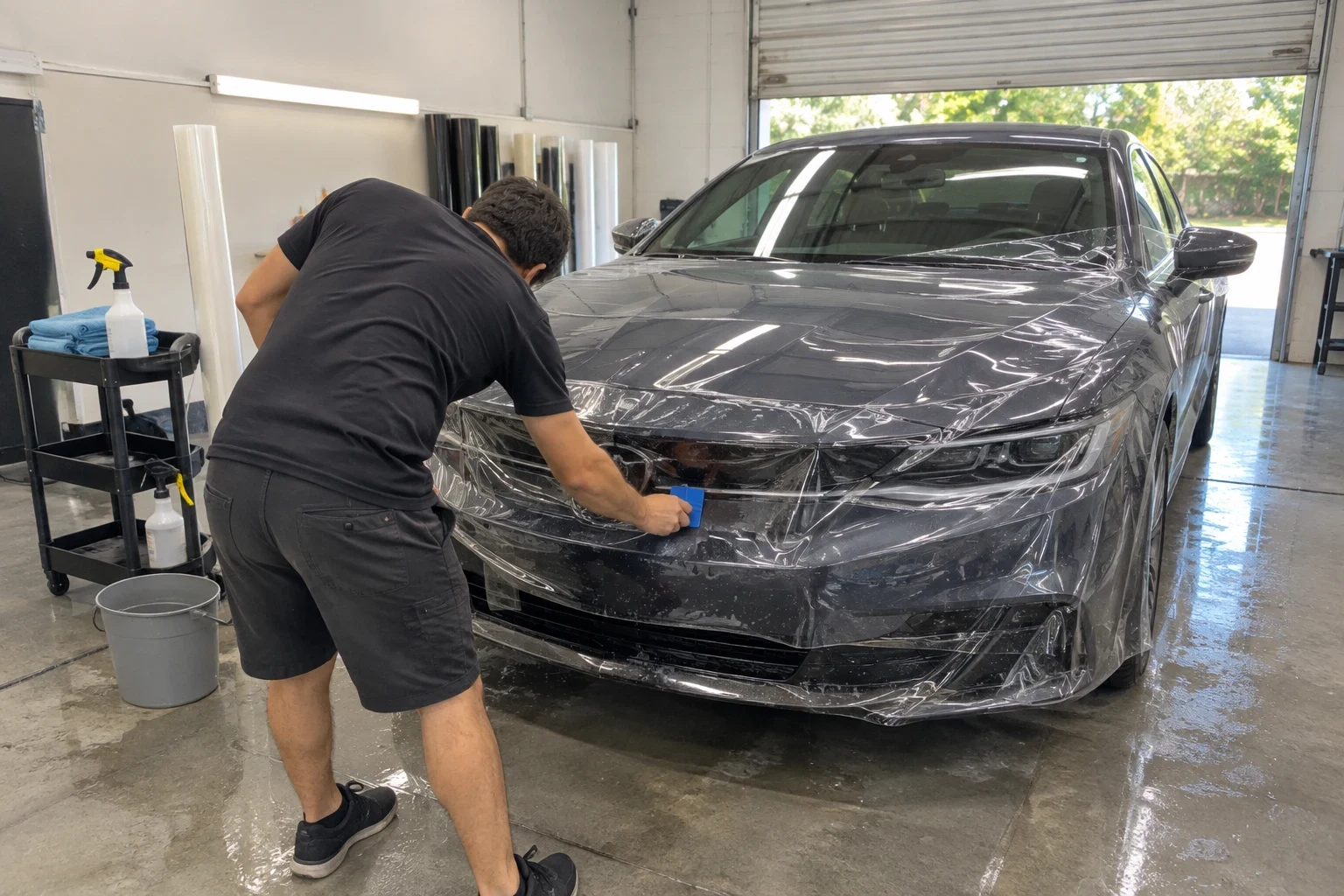
Paint protection film is a clear urethane layer that takes the rock chips, sand and scuffs your paint would otherwise take. We fit it at our shop with patterns cut off the car, careful edge work and sensors left clear, so the paint stays safe during the install too.
What paint protection film does for your car
Most chips start on the leading edges: the hood, the front bumper, the mirrors and the fenders behind the front wheels. A small stone at freeway speed cracks the clear coat, and once the base coat is exposed it can start to rust. Paint protection film, often called clear bra, absorbs that hit. The film flexes, the paint under it does not get touched, and light swirls in the top layer can fade on their own with warmth from the sun.
Safety comes first in how we install it. A badly fitted film can mean razor lines cut into the clear coat, harsh chemicals on fresh paint, or a radar sensor covered by film. We avoid all of that. Most of the film is cut on a plotter before it touches the car, and where a custom edge is needed we use cutting tape laid under the film instead of a blade on the paint.
We are a STEK certified installer and have been in business for 6 years. If you want to talk through how much coverage makes sense for how you drive, a call gets you a professional consultation and a quote.
What the work includes
Full wash and decontamination
We wash the car, then clay and iron-treat the panels getting film. Any grit left on the paint would be trapped under the film for good.
Paint check with photos
Before we start, we look over the paint under shop lights and photograph existing chips and scratches. You see what is there before the film goes on, and we tell you if a spot should be touched up or polished first.
Pre-cut patterns
Patterns are matched to your make, model and year and cut on a plotter off the car. That keeps blades away from your paint on nearly every panel.
Wrapped edges where possible
We tuck film around panel edges where the pattern allows, so edges are harder to see and less likely to lift when you wash the car.
Sensors and cameras left working
Parking sensors, front radar units and cameras get proper cutouts or clearance. Your driver-assist features should work the same after the install as before it.
Aftercare walk-through
When you pick up, we show you the work and explain how long to wait before washing and what to avoid while the film settles. If you plan to add ceramic coating on top, we explain how that fits in.
Signs it is time for paint protection film
You just bought the car
New paint is the best paint you will ever have. Film goes on cleanest before the first chip shows up.
The hood is already peppered
Small white dots on the front edge mean the clear coat is breaking. Film will not erase them, but it stops new ones from adding up.
You spend a lot of time on the freeway
Long commutes behind trucks throw gravel at your bumper all day. A full front package covers the parts that take the most hits.
Scuffs behind the wheels and on door edges
Rocker panels pick up tire spray and door edges hit parking garage walls. These are small areas that film handles well.
You lease or plan to sell
Chips and scuffs show up on lease turn-in reports and trade-in offers. Film can come off later, leaving the paint under it in the shape it was in.
How a paint protection film day runs
- 1
Phone call and planning
You call, we ask about the car and how you drive, and you get a quote. We set a drop-off time and give you a rough idea of how long we will need the car.
- 2
Prep and inspection
You bring the car to our shop. We wash, decontaminate and check the paint, and photograph anything already there.
- 3
Install
Our lead installer, who has 15 years of experience, lays each panel with a slip solution, positions it, and squeezes out the water and air. Badges and trim come off only when it helps the fit, and they go back the way they came off.
- 4
Cure and final check
The car stays indoors while the adhesive grabs. We go over every edge under the lights and fix anything that is not right before you see it.
- 5
Pickup
We walk you around the car, point out edges and seams, and go over care. Small moisture spots under fresh film are normal and clear up as it dries.
What moves the price
There is no single price for paint protection film because no two jobs cover the same area on the same shape of car. Your quote by phone is built from the car and the coverage you pick. These are the main things that change it.
- How much of the car you cover
- A partial front covers part of the hood and fenders. A full front, a track package or full body coverage each take more film and more hours.
- Body shape and trim
- Deep vents, sharp body lines and complex bumpers take longer to fit cleanly. Some cars need trim or badges removed to wrap edges.
- Condition of the paint
- Film seals in whatever is under it. If the paint needs polishing or chip repair first, that adds time before the install.
- Finish and old film
- Gloss film keeps the factory look, while matte film changes it to a satin finish. Removing old, yellowed film from a previous install also adds labor.
Paint protection film questions
Something not covered here? (916) 767-0629
Will the film damage my paint when it comes off?
On factory paint in good shape, film should peel off cleanly when it is removed properly with a little heat. Problems usually come from repainted panels or paint that was already failing. We check for that during the inspection and tell you before we start.
Can people tell the car has film on it?
Up close, you may spot an edge if you look for it. From normal distance, gloss film is hard to see. Wrapped edges help, which is why we tuck them where the pattern allows.
Will it affect my parking sensors or radar?
It should not. We leave cutouts or clearance for sensors, cameras and front radar units so the car's safety systems keep reading normally. If a sensor sits in a tricky spot, we will talk it through with you first.
Can I put ceramic coating on top of the film?
Yes, and many owners do. The coating makes the film easier to wash and helps water bead off. Ask about ceramic coating when you call and we can plan both.
How long will you have my car?
It depends on coverage. A partial front is much quicker than a full body job, which can take a few days. We give you a time estimate with your quote so you can plan around it.
Does the film turn yellow?
Older films did. Current films hold up much better against the sun, which matters with the long, hot summers here. Keeping the film clean also helps it stay clear.
Keep the chips off your paint
Tell us the car and how you drive it. We will explain the coverage options and give you a quote.